Home EV charger installation
Plan Level 2 charging around the vehicle, daily driving, parking, cable route, and available electrical capacity. Start a residential installation review.
EV Charging Installers of America plans, installs, and services EV charging infrastructure for homes, workplaces, fleets, multifamily properties, and commercial sites. Our electrical scope includes capacity review, Level 2 and DC fast charging, permitting, utility coordination, installation, and commissioning.
New Jersey and regional projects are reviewed by address, service, utility requirements, and scope. Check service-area details.
A home garage, an apartment building, and a fleet depot need different electrical and operating plans.
Plan Level 2 charging around the vehicle, daily driving, parking, cable route, and available electrical capacity. Start a residential installation review.
Evaluate dwell time, vehicle schedules, number of ports, charging power, utility service, networking, and phased expansion. Explore commercial EV charging.
A charger that will not start may have a power, vehicle, equipment, network, or account issue. Request EV charger troubleshooting and maintenance.
Coordinate charging demand with site capacity and operating needs. Demand response, V2G, and VPP participation each have separate equipment and program requirements.
A spare breaker position is not proof of available electrical capacity.
Review the service rating, calculated load, panel condition, equipment ratings, grounding and bonding, and any required distribution or utility work.
Match connector, output, cable reach, mounting, weather exposure, vehicle access, and site protection to the property and equipment instructions.
Define conductor and conduit routes, trenching or restoration, permits, inspection requirements, and responsibilities for utility upgrades.
Confirm the agreed testing, equipment settings, labeling, network activation, operating instructions, and maintenance responsibilities before closing out the installation.
Examples from EVCIA’s published installation portfolio. Project photographs show completed installations, not an uptime, savings, or maintenance-performance guarantee.
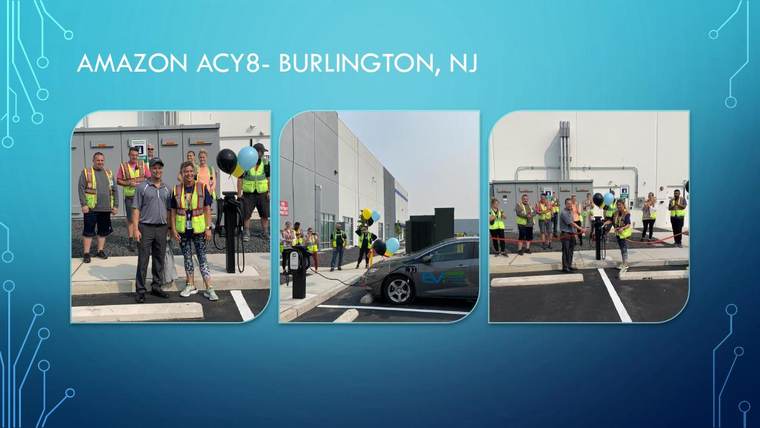
Burlington, NJ
Logistics / workplace charging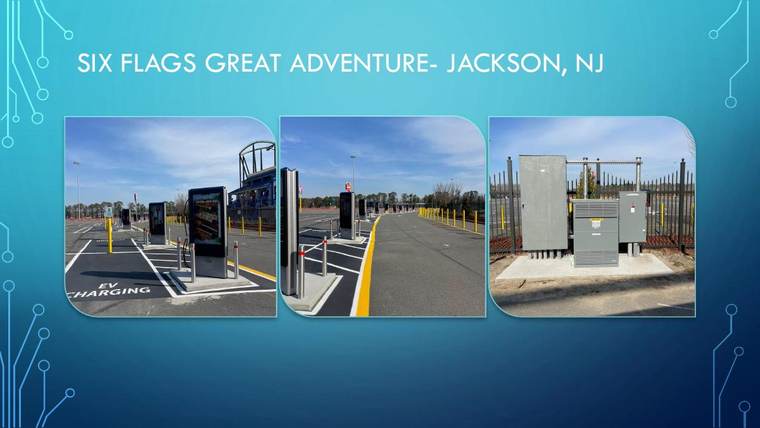
Jackson, NJ
Destination charging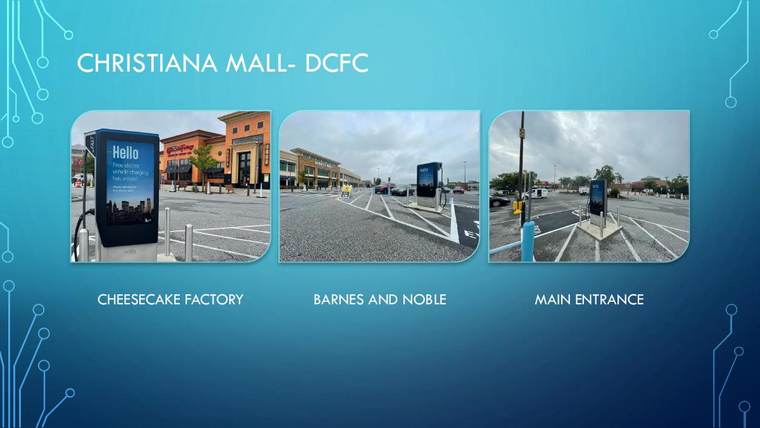
Newark, DE
DC fast-charging installationClear answers before equipment is selected or work is scheduled.
Electrical capacity, charging power, number of ports, equipment selection, distance from distribution equipment, trenching, restoration, utility upgrades, permits, and network requirements all change scope. EVCIA reviews the site before providing a project-specific estimate.
No. A load calculation and equipment review determine whether the existing service is suitable. Listed load management may be appropriate for some installations; empty breaker spaces alone do not establish capacity.
No. Conventional charging supplies energy to the vehicle. Vehicle-to-home backup and vehicle-to-grid export require a specifically supported bidirectional system; utility export also requires authorization.
Service and maintenance can be scoped around the equipment, location, manufacturer support, network access, and operating needs. Review the EV charger maintenance and repair page for intake details.
Homeowners use the residential estimate path. Commercial, fleet, and multifamily buyers use the commercial assessment path.