Managed charging: control consumption
Change when or how quickly a vehicle charges. This can support load management or eligible demand-response participation without exporting vehicle energy.
EV Charging Installers of America evaluates vehicle-to-grid (V2G) projects for electrical infrastructure and installation planning. We review the proposed vehicle, bidirectional charger, site electrical system, utility requirements, and program-provider responsibilities before defining a buildable scope.
New Jersey and regional projects are reviewed by address, service, utility requirements, and scope. Check service-area details.
V2G allows a supported electric vehicle and bidirectional charging system to export energy to the utility grid through an authorized connection. It is not enabled by an ordinary charger or a home-backup installation alone.
Change when or how quickly a vehicle charges. This can support load management or eligible demand-response participation without exporting vehicle energy.
Use a supported vehicle and integration system to supply approved home or building loads. Backup operation requires the appropriate isolation and protection arrangement.
Send energy from a compatible vehicle system to the grid. Equipment support, interconnection, export permission, and the applicable program or tariff must be verified.
A program operator may aggregate eligible vehicles, batteries, or controllable loads. VPP participation does not mean every asset exports power. Compare VPP infrastructure requirements.
A bidirectional product announcement or standards reference is not a complete compatibility path.
Exact make, model year, software, manufacturer-supported bidirectional operation, approved charger, and any battery warranty or usage conditions.
Electrical service capacity, power-conversion equipment, protection settings, metering, controls, equipment location, permits, and required electrical design.
Serving utility, authorized export arrangement, interconnection review, operating limits, required agreements, and permission to operate. No export should be assumed before approval.
Provider acceptance, communications, dispatch authority, reserve/departure requirements, testing, compensation terms, and field maintenance responsibilities.
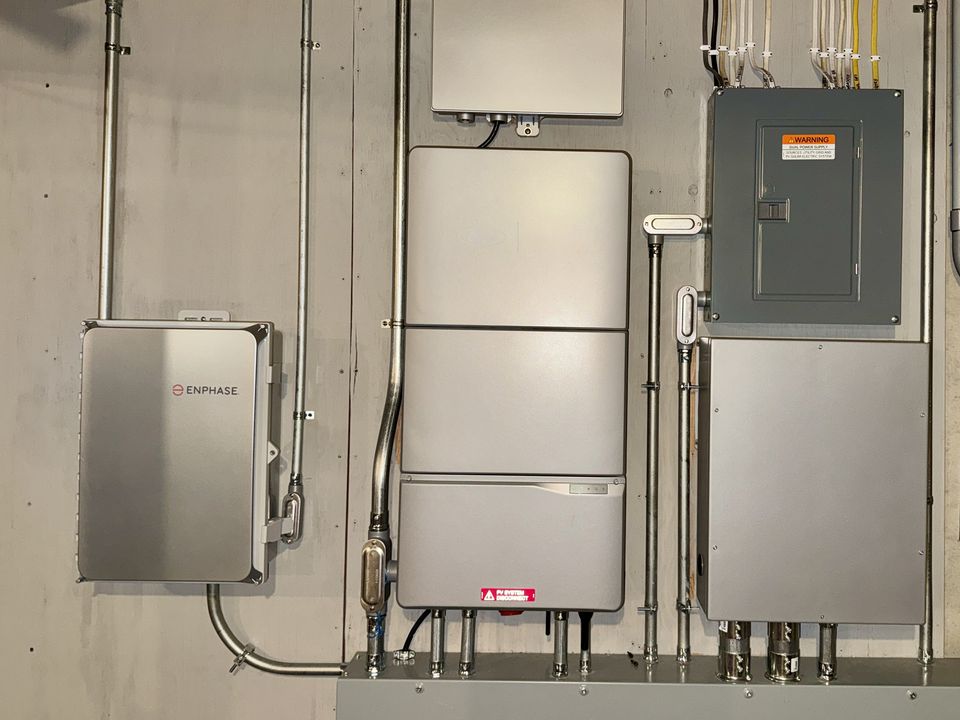
This completed Ford home-energy integration is related electrical-installation experience. It is not represented as an operating V2G grid-export project; a separate supported equipment and utility/export pathway is required.
See Documented V2H ProjectsClear answers before equipment is selected or work is scheduled.
No. Home backup and grid export are different operating arrangements. The vehicle, charger, software, protection, metering, utility authorization, and program/tariff must support the intended V2G use.
A feasibility review starts with the exact vehicle, software, charger, site, utility, and program. EVCIA does not promise compatibility based only on the vehicle brand or the phrase bidirectional-ready.
An eligible program may compensate approved services, but payment, dispatch availability, fees, battery usage conditions, and operating obligations are contract-specific. No revenue, savings, or payback is guaranteed.
Yes. Share the supported vehicle/charger combination, equipment specifications, utility/interconnection path, site details, commissioning requirements, and maintenance expectations for an electrical-scope review.
These references explain the technology; they do not establish EVCIA’s participation in any utility or aggregator program.
Send the vehicle and charger details, utility, project location, operating goals, and program documentation. The next step may be a feasibility review—not an immediate installation proposal.