Charger will not start
Report the equipment model, displayed error, whether one or all ports are affected, and when the issue began. Do not open the charger or electrical panel.
EV Charging Installers of America provides EV charger troubleshooting, repair evaluation, and preventive maintenance for home and commercial charging systems. We assess the electrical supply, charging equipment, communications, and vendor responsibilities to define the appropriate service scope.
New Jersey and regional projects are reviewed by address, service, utility requirements, and scope. Check service-area details.
Similar symptoms can come from different parts of the charging system.
Report the equipment model, displayed error, whether one or all ports are affected, and when the issue began. Do not open the charger or electrical panel.
Charging rate can be limited by the vehicle, configured output, site load management, temperature, electrical supply, or equipment faults. Record the symptom rather than assuming the cause.
Connectivity, cellular coverage, local networking, platform accounts, or hardware can be involved. Network access and provider support may be needed for diagnosis.
Do not use equipment with exposed parts, damaged cables, burning odor, or water intrusion. Keep clear and contact appropriate emergency services for immediate danger. Request qualified electrical service before reuse.
Intervals and tasks follow manufacturer instructions, site conditions, access permissions, and the agreed maintenance plan.
Inspect accessible charging equipment, connectors, cable management, mounting, protective devices, labeling, and visible damage or environmental exposure.
Scope qualified electrical inspection, functional tests, fault review, and corrective work around the installed equipment and safe access requirements.
Identify the owner of communications, subscriptions, accounts, remote access, firmware decisions, and manufacturer or network escalations. Not every issue is an electrical repair.
Document findings, equipment identity, observed faults, work performed, recommended corrections, and responsibilities for follow-up or replacement.
Provide observable information. Do not remove covers, touch exposed parts, or repeatedly reset faulting equipment.
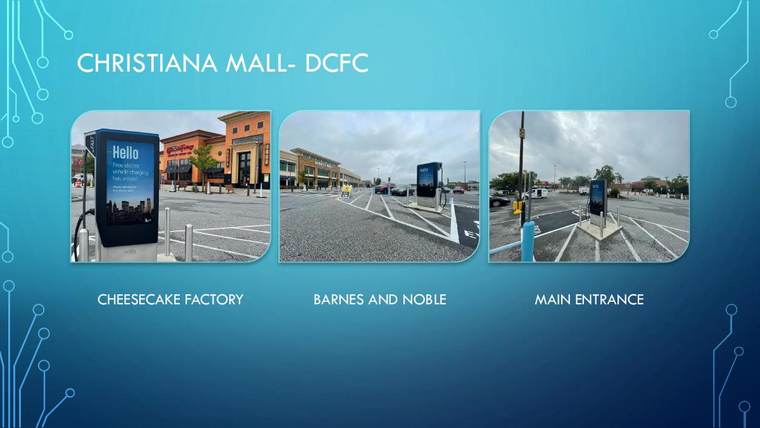
EVCIA’s published Christiana Mall DCFC project shows completed charging infrastructure. Maintenance for an existing site is scoped separately after reviewing the installed equipment, fault history, network access, and service requirements.
View the Installation PortfolioElectrical integration remains important as sites add energy storage, solar, and grid-interactive controls.
Existing solar PV and battery-system service can be assessed separately for equipment, manufacturer access, diagnostics, and electrical integration. Explore battery storage.
Participating assets may need electrical maintenance, communications checks, and coordination with the program operator. Review VPP field installation and maintenance. The operator retains dispatch and program responsibilities.
Clear answers before equipment is selected or work is scheduled.
Requests can be evaluated for existing equipment, including systems EVCIA did not install. Acceptance depends on location, equipment condition, documentation, manufacturer/network support, safe access, and the required scope.
No. Electrical equipment, charger hardware, the vehicle, communications, and payment or user accounts have different owners and access requirements. The service review identifies the appropriate field work and vendor escalation.
No blanket uptime, 24/7 availability, or arrival-time guarantee is made on this page. Coverage, priority scheduling, response targets, and exclusions must be confirmed in the service agreement.
Not without diagnosis. Confirming the fault can distinguish equipment failure from electrical supply, vehicle, configuration, or network issues. Any repair or replacement recommendation depends on the findings and manufacturer requirements.
Describe the fault or maintenance need and identify the site. A request starts the service review; it is not a confirmed appointment or emergency dispatch.